


How to Create Rock & Metal Music Videos That Captivate
- Travis B
- 2 days ago
- 11 min read

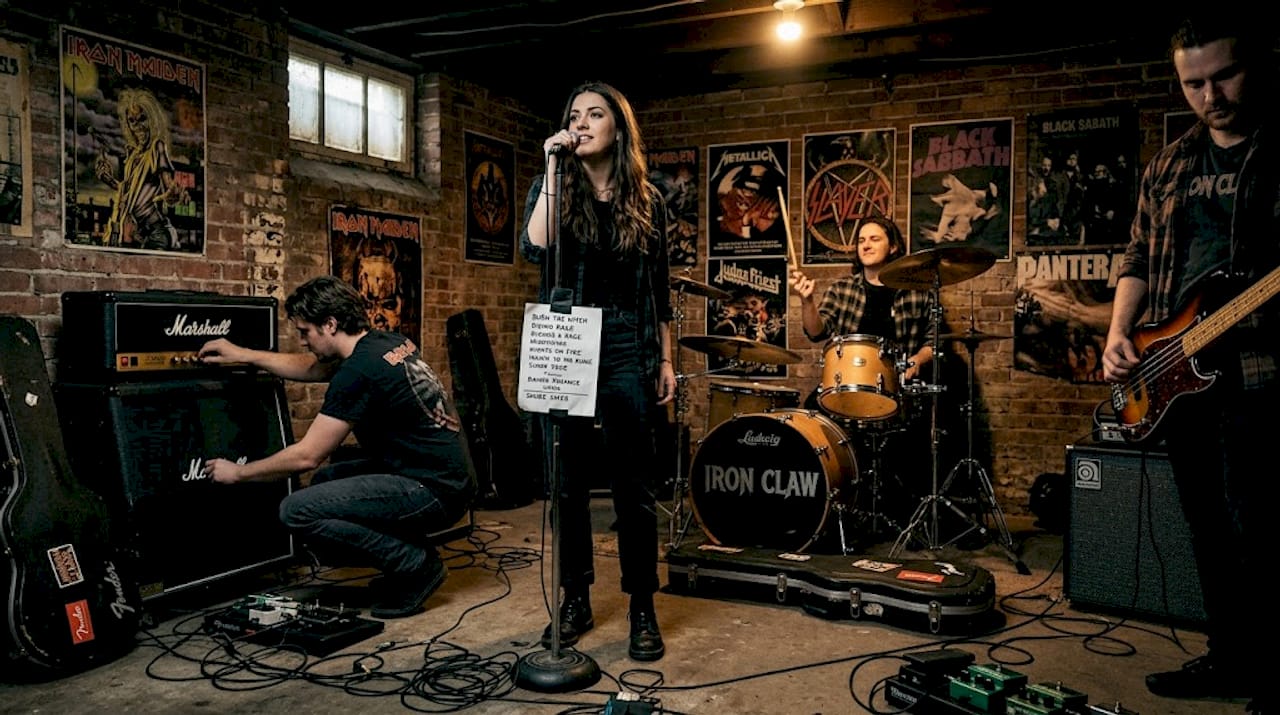
Creating a music video that genuinely captures the raw intensity of hard rock or heavy metal is one of the toughest creative challenges an independent artist faces. You have this massive, driving sound, and you need visuals that don’t shrink away from it. Too many DIY videos fall flat because the lighting is weak, the shots feel random, or the concept never really connects to the emotion in the music. We’ve been through that struggle ourselves. This guide walks you through every stage of the process, from early concept all the way to release, using proven workflows and creative technology that actually serve the genre.
Table of Contents
Key Takeaways
Point | Details |
Plan before shooting | A clear concept, shot plan, and permit roadmap smooth every stage of production. |
Lighting is critical | Prioritize lighting setups and stabilization for pro-level impact on any budget. |
Use genre-specific effects | Amps up rock/metal visuals by blending concert-style energy with creative lighting and special effects. |
Embrace innovation | Modern tools like AI and hybrid effects bring unique style—but keep narrative and emotion at the core. |
What you need before you begin
With your inspiration ignited, let’s ground your vision with the essentials you’ll need before cameras roll.
Before you shoot a single frame, you need honest answers to a few critical questions. What is the core concept? Where are you filming? Who is helping you? And how much are you realistically willing to spend? A lot of first-time video creators skip this prep work and then spend twice as long fixing problems on set that could have been solved in an afternoon of planning.
Concept and treatment are where everything starts. A treatment is basically a written summary of how the video will look and feel, including the mood, visual style, and narrative arc if there is one. Even a one-page treatment helps keep everyone aligned when things get chaotic on shoot day.
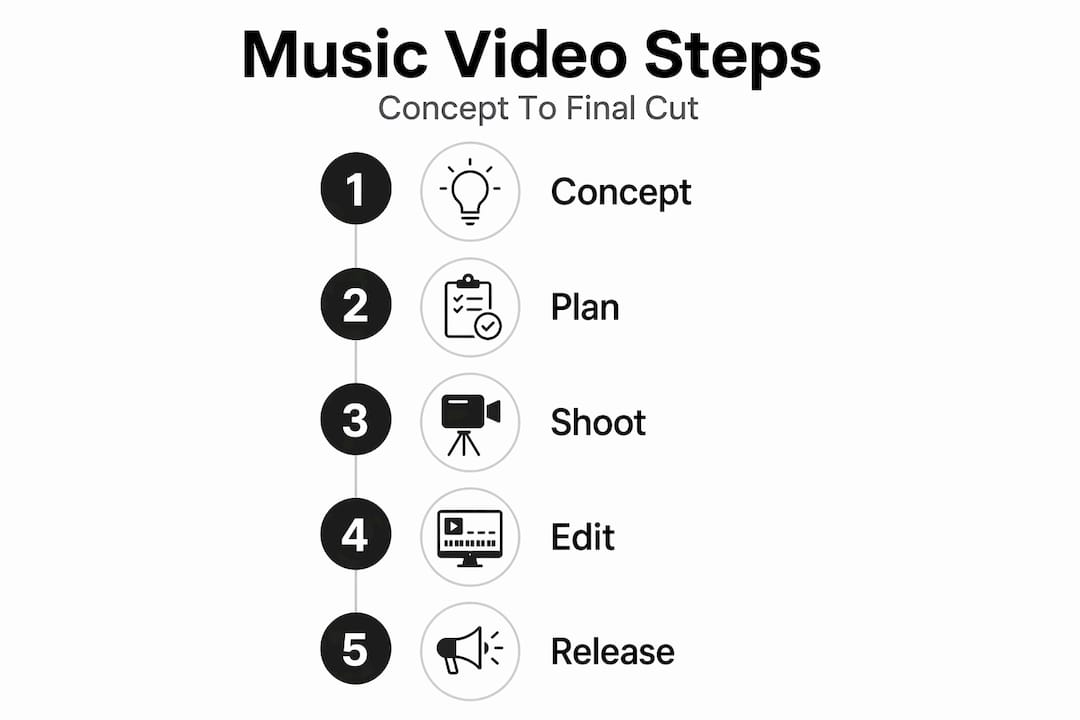
For crew and equipment, your options break down into two main paths: DIY solo or small team, and a more professional setup with dedicated roles. Here is a comparison of what each typically involves:
Element | DIY / Solo setup | Pro / Small team setup |
Camera | Smartphone or entry DSLR | Cinema camera or mirrorless |
Lighting | Natural light, basic LED panels | Three-point setup, truss rigs |
Stabilization | Handheld gimbal | Dolly, jib, or motorized slider |
Audio | Playback sync on set | Shotgun mic for BTS, master track |
Crew size | 1 to 3 people | 4 to 10+ people |
Estimated budget | $0 to $1,500 | $3,000 to $50,000+ |
As the Music Video Production Guide notes, budgets range from $0 to $50,000+, but what truly separates a polished video from a forgettable one is lighting and stabilization, not how much you spent on a camera body.
Key pre-production needs at a glance:
Concept clarity: Can you describe your video idea in one sentence? If not, keep working on it.
Location scouting: Indoor or outdoor, each comes with different lighting and permission needs.
Shot list and schedule: Even a rough one prevents wasted time on set.
Legal considerations: Public parks, urban rooftops, and concert venues often require permits. Budget extra time to secure these well in advance.
Pro Tip: Spend your first $500 on lighting before anything else. A well-lit shot on a smartphone looks more professional than a poorly lit shot on an expensive cinema camera. Add a basic three-axis gimbal next for smooth, controlled movement. These two investments carry any budget video.
For impactful music videos in the hard rock and metal space, visual intensity is everything. Plan for it before you show up.
Structuring your music video: From concept to shoot day
Once you’ve gathered your crew and gear, structuring your shoot is the next major step, and here’s how to do it right for maximum impact.
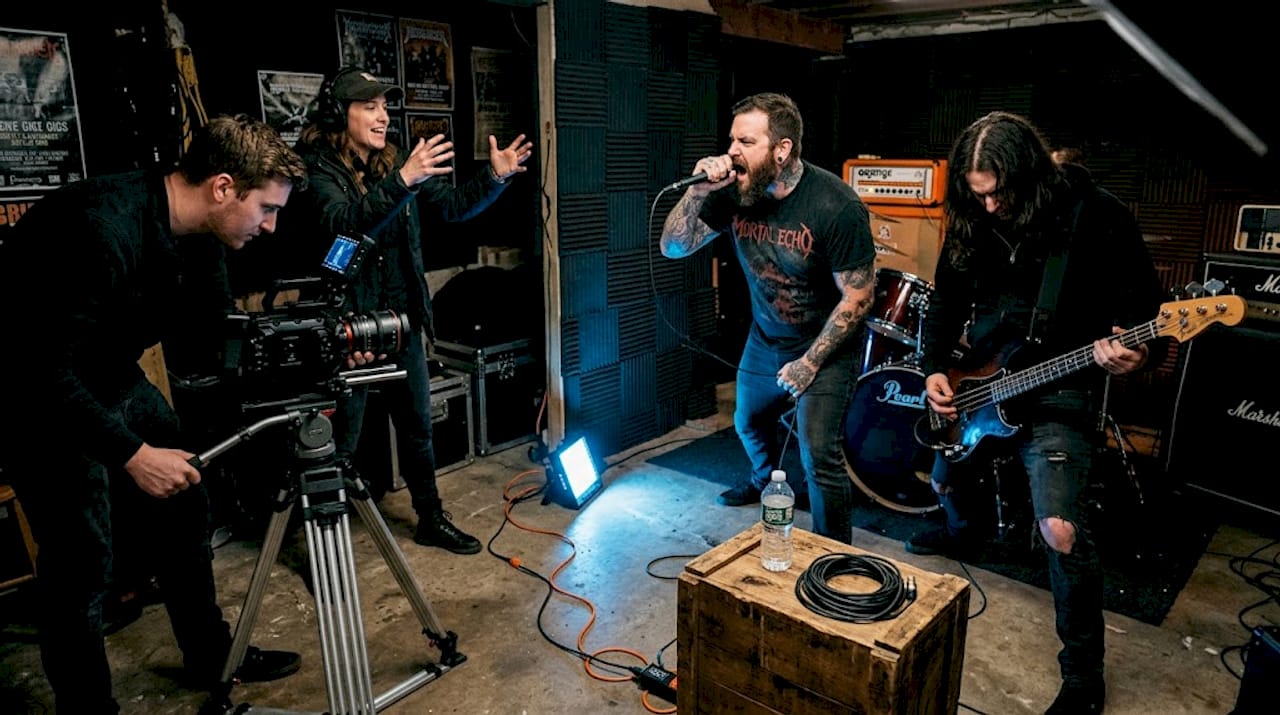
Music video production follows three structured phases: pre-production, production, and post-production. Each phase has its own priorities and its own failure points.
Pre-production phase:
Finalize the treatment and storyboard (even rough sketches help)
Create a detailed shot list, organized by location and lighting setup
Build a call sheet for every shoot day, listing crew call times, locations, and equipment needs
Scout all locations and confirm access or permits
Lock your master audio track and create a playback-ready version for set
Production phase: 6. Run a quick lighting check and camera test before talent arrives 7. Shoot performance sections first, since band energy is highest early in the day 8. Capture cutaway, narrative, or atmospheric B-roll to fill gaps in editing 9. Record multiple takes of every key moment, more than you think you need
Post-production phase: 10. Organize all footage and sync to master audio immediately after filming 11. Rough cut the video to map out the full structure 12. Color grade, add effects, and finalize sound alignment 13. Export in required formats for each distribution platform
For hard rock and heavy metal specifically, the visual language leans hard into performance: simulated live concert energy, intense lighting shifts, fast cuts, and practical or visual effects that mirror the aggression and emotion in the music. A symbolic or narrative thread woven through a performance video adds depth without softening the edge.
Here’s how traditional performance videos compare to AI-assisted or abstract approaches for the genre:
Approach | Pros for metal | Cons for metal |
Traditional performance | Raw, authentic energy; fans connect easily | Requires solid set design and strong cinematography |
AI-assisted / abstract | Unique visuals; stands out in digital feeds | Can feel cold or disconnected from the music’s heart |
Hybrid blend | Best of both worlds; emotional + innovative | Requires more planning and post-production skill |
Pro shooters typically capture 30 to 60 usable takes per shoot day across all shots, giving editors real options. Plan for that kind of coverage, even on a small crew.
For a full music video step-by-step process tailored to rock and metal, you can go deeper on each of these phases. And if you want ideas that really hit emotionally, explore some emotional music video ideas built around the genre’s strengths.
Lighting, effects, and audio: Key techniques for rock/metal impact
With your plan in hand, bringing your video to life means mastering the techniques that set rock and metal work apart.
Lighting is where your video either lives or dies. The good news is that even on a tight budget, you can create visuals that feel massive. The three-point lighting setup uses a key light (the main source), a fill light (softens shadows), and a back light (separates subject from background). This setup builds natural depth and dimension in every shot.
Golden hour, meaning the 30 to 60 minutes after sunrise or before sunset, delivers warm, dramatic natural light for outdoor shoots at zero cost. It has a cinematic quality that no cheap LED can replicate.
For practical effects that elevate the intensity:
Low budget: Colored LED gels, bare bulb flicker effects, controlled fog machines
Mid budget: Truss-mounted lights, strobe arrays, backlit haze for volumetric light beams
High budget: Pyrotechnic sparks or cold fire fountains, full stage lighting rigs, laser systems
Any budget: Strong contrast ratio (bright subject, dark background) creates visual drama instantly
Prioritizing performance shots with pyrotechnics, fog, and rapid cuts is a core signature of the heavy metal visual vocabulary, so lean into those elements whenever your budget allows.
Safety note: Always work with a licensed pyrotechnician for any open flame or spark effects. Fog machines require proper ventilation and can trigger venue smoke alarms. Power loads for full lighting rigs need to be checked against your location’s electrical capacity before anything gets plugged in. These are not optional precautions.
For audio on set, you are not recording the music itself, since you will sync to the master track in post. But shotgun and lavalier mics are still essential for capturing clean behind-the-scenes audio, interviews, or any spoken narrative elements. Always play back the master track at full volume on set so performances feel authentic and stay naturally in sync.
Pro Tip: Sync your footage to audio during the shoot using a clapboard or a simple hand clap in front of the camera at the start of each take. This small habit saves hours in post-production and prevents the worst audio-sync headaches.
For a deeper look at innovative video effects built specifically for the genre, there’s a lot more to explore when you’re ready.
Innovative and AI-driven music video techniques
Beyond the basics, pushing boundaries means exploring new tech, and knowing how to keep it true to the genre’s roots.
The production landscape for independent artists has shifted dramatically in the past few years. Tools that used to require a full studio budget are now accessible to DIY creators willing to learn them. Here are the leading options:
AI beat-sync video generators: These tools analyze your audio track and generate or sync visuals automatically to the tempo and energy of the music
Gimbals and motion stabilizers: Affordable three-axis gimbals bring cinematic movement to any camera system, including smartphones
Green screen and virtual environments: Green screens enable custom environments that place performers in impossible or fantastical worlds without leaving the studio
Volumetric capture: A more advanced technique that records a 3D representation of performers, allowing the “camera” to move freely in post-production
Hybrid analog-digital animation: Combining practical in-camera effects with digital compositing, a method that gives a unique handmade-but-polished look
Real indie metal artists have used AI beat-sync tools to create sprawling, abstract visuals for tracks that would otherwise have no video at all, because the cost and time investment is dramatically lower. That’s a real advantage for a band building buzz between bigger releases.
The honest trade-off, and this matters: AI tools speed up production and add convenience, but they can lack the narrative depth and emotional authenticity that makes a video truly resonate with a dedicated metal fanbase. AI visuals work best as a complement to live performance footage, not a replacement for it.
Pro Tip: Record your full performance video first, then layer in AI-generated or digitally composited elements during post-production. This preserves the human authenticity your audience connects with while still giving you the visual innovation that makes the video shareable and memorable.
Dive further into AI-driven music video tips for practical guidance on integrating these tools into your workflow.
Editing, finishing touches, and common pitfalls
With shooting wrapped, your path to a pro-level final video continues in the edit suite, and here’s how to deliver a polished result and sidestep setbacks.
The editing phase is where everything either comes together or falls apart. A lot of creators underestimate how long this takes, and they underbudget for it, which is one of the most common reasons otherwise solid videos end up feeling unfinished.
Core editing steps:
Import and organize all footage by scene, location, and camera angle
Sync all clips to the master audio track immediately
Build a rough cut using your shot list as a guide
Tighten pacing to match the energy and tempo of the music
Apply color grading (for metal, high contrast and cool-to-neutral palettes tend to work well)
Add any VFX, transitions, or AI-generated visual layers
Final audio check: make sure the master track is perfectly synced and levels are clean
Export in the correct formats for each target platform
Common post-production and release mistakes to avoid:
Using a demo track instead of the final master audio: This creates sync issues that are painful to fix after the full edit is locked
Underbudgeting post-production time: Plan for at least as many hours in the edit as you spent shooting
Wrong export formats: Vertical for social platforms like TikTok or Instagram Reels, horizontal for YouTube and television
Ignoring platform-specific requirements: Each platform has different resolution, bitrate, and file format specifications
Forgetting release day strategy: A great video with no promotional plan still gets ignored
Securing permits, planning formats, and using master audio from the start are non-negotiable steps that separate creators who get consistent results from those who keep starting over.
Pro Tip: If you find a crucial shot is missing in the edit, go back through your B-roll before panicking. An abstract or cutaway shot from the same color palette and lighting environment can often cover a gap without the viewer ever noticing. For audio sync problems, use your DAW (digital audio workstation) to export a clean reference track with visible waveform markers before you start the edit.
For a complete walkthrough on editing for music videos in this genre, there are detailed resources available that go even deeper on color and pacing.
What most rock/metal music video guides miss: Emotion over excess
Now that you’ve mastered the technical and creative essentials, let’s zoom out to what really makes a video unforgettable in the world of rock and metal.
Here’s the thing we’ve noticed after years of living inside this genre as a band: most guides pile on gear lists, software recommendations, and techniques, and they barely touch the thing that actually makes a video stick with people. Emotion. A real concept. Something that feels honest.
We have seen technically perfect videos get forgotten within a week. And we have seen low-budget, almost raw videos carry a band to a completely different level of recognition because the concept was strong and the emotion was true. The best music videos serve the song first, and every visual choice supports that one core idea you can describe in a single punchy sentence.
Think about Metallica’s “One.” It is not flashy. It is dark, it is stripped back, and it is devastating because the visuals directly honor the weight of the lyrics. That is the standard. Not the biggest production budget. Not the most AI-generated sequences. The most honest connection between sound and image.
Before you start storyboarding your next video, ask yourself: can I describe this concept in one sentence, and does that sentence genuinely support what the music is saying? If the answer is no, keep refining.
Pyrotechnics and VFX are tools. They serve emotion. They do not create it. And for emotional video approaches that resonate deeply in heavy music, simplicity combined with a strong visual narrative will outlast spectacle every single time.
Get support for your next rock/metal video project
After your creative plan takes shape, here’s how you can tap into tools, expert tips, or production support for your own music videos.
We built Winter Agony from the ground up in Kentucky, fueled by nothing but passion for this genre and a stubborn belief that independent artists can create work that stands alongside anything produced with a major label budget. That same spirit is what drives everything we share here.
If you are looking for rock and metal video inspiration to spark your next concept, or you want to go deeper on music video AI techniques that work specifically for heavy genres, we have put together resources that come directly from real creative experience, not theory. Head over to winteragony.com to explore tutorials, creative guides, and a community of artists who are building something real without waiting for permission.
Frequently asked questions
What’s the most important factor for high-quality DIY music videos?
Lighting and stability make the biggest difference even on the smallest budgets, far more than the camera you use.
How much should I budget for an independent hard rock music video?
Independent narrative videos start around $2,000 to $5,000, though creative DIY approaches with existing gear can bring that number down significantly.
Do I need permits for shooting a music video outdoors?
You often do need location permits, and you should apply 2 to 3 weeks ahead for public spaces like beaches, parks, or urban streets.
Are AI-generated music videos effective for rock or metal?
AI tools create striking visuals quickly, but they can lack narrative depth compared to traditional methods, so they work best layered over live performance footage.
Should I film in vertical or horizontal format?
Plan your format around your platform: vertical for social media like TikTok and Instagram Reels, horizontal for YouTube and TV distribution.
Recommended
Comments