


Music video trends 2026: What's shaping rock visuals
- Travis B
- 6 hours ago
- 8 min read

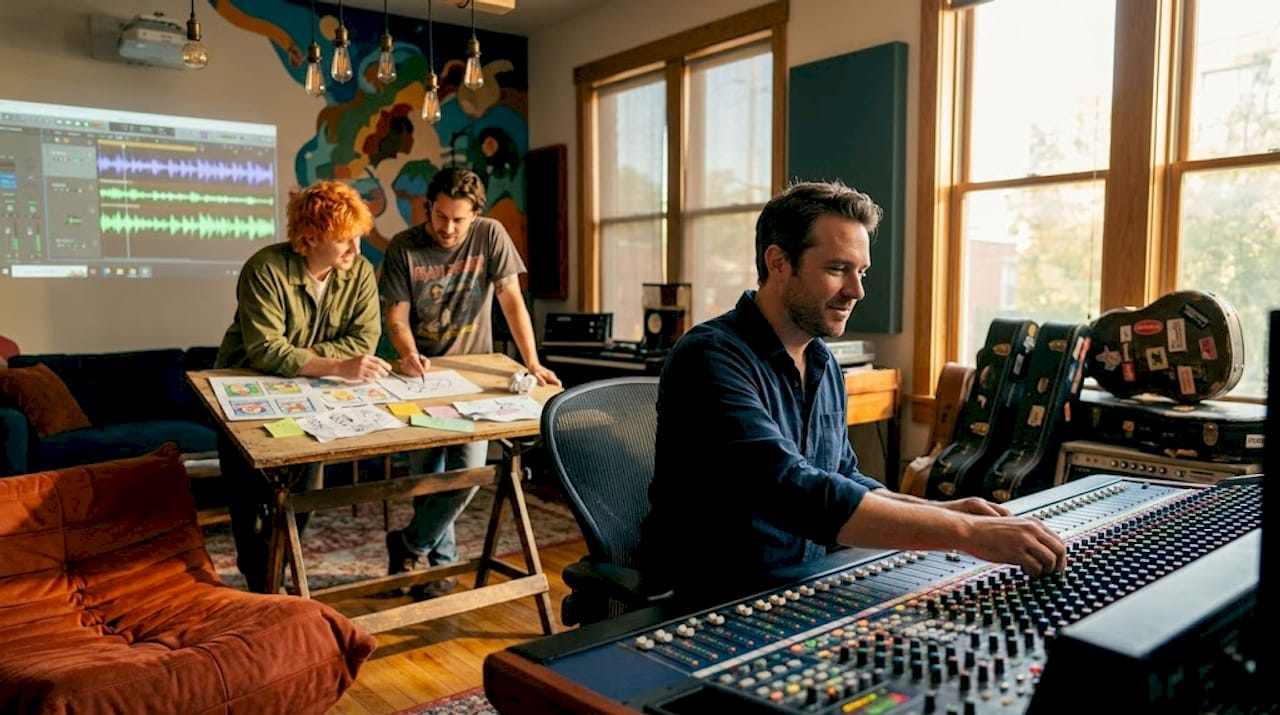
The landscape of music video creation is moving faster than most bands can keep up with, and if you’re a hard rock or heavy metal fan watching this shift, you already feel it. Music video trends 2026 aren’t just about prettier visuals or bigger budgets. They’re about AI rewriting production timelines, short-form platforms rewarding intensity over length, and interactive tech pulling fans deeper into the experience. This article breaks down exactly what’s driving these changes, why they hit different for our genre, and what you should actually pay attention to.
Table of Contents
Key Takeaways
Point | Details |
AI revolutionizes production | Generative AI enables faster, high-fidelity music video creation for all genres, especially rock and metal. |
Short-form dominates discovery | Clip-friendly, high-intensity visuals are essential for reaching fans and driving music video engagement. |
Text-to-video and audio sync | New tools let creators design visuals directly tied to lyrics and musical peaks for maximum impact. |
Interactive and visual-first strategies | Launching with immersive, interactive visuals creates deeper connections between artists and fans. |
Benchmarks drive quality | Emerging AI benchmarks ensure creativity is measured by real-world impact and narrative alignment, not just style. |
AI-driven workflows: Revolutionizing music video creation
With AI transforming how videos are made, the creative process for rock and metal has genuinely changed. We’re not talking about minor shortcuts. Generative AI and agentic workflows flatten production timelines and deliver high-resolution videos faster than traditional CGI ever could. What used to take months of rendering and manual compositing now gets done in days.
Tools like Google’s Gemini Enterprise Agent Platform and Veo 3.1 are at the front of this shift. Agentic workflows, meaning AI systems that handle multi-step tasks automatically without constant human input, are letting small teams produce visuals that would have required a full production house five years ago. For rock and metal creators working with limited budgets, that’s a real game changer.
AI music video creation now converges text and music-driven synthesis, blending computer vision with generative audio and video in one pipeline. The result is a faster path from raw idea to finished visual.
Key shifts AI is driving in 2026 music video production:
Rapid iteration on visual concepts without expensive reshoots
Automated color grading and scene transitions synced to audio
High-resolution output accessible to independent artists
Faster storyboarding using text prompts before any footage is shot
Production stage | Traditional timeline | AI-assisted timeline |
Concept to storyboard | 2 to 4 weeks | 1 to 3 days |
CGI rendering | 4 to 8 weeks | 3 to 7 days |
Color grading | 1 to 2 weeks | Hours |
Final delivery | 2 to 3 weeks | 3 to 5 days |
Pro Tip: If you’re a creator just getting into AI video tools, start by using AI for storyboarding and concept visualization before touching footage. It saves time and keeps your creative direction clear from the start. Check out these AI video tips for rock/metal for practical guidance, and get some context from the evolution of music videos to see how far things have come.
From text-to-video to audio-reactive: The new synthesis toolkit
AI-driven pipelines speed things up, but the real creative doors being opened are in synthesis tools. Music video tooling is converging on text and music-driven audiovisual synthesis, with platforms like Runway generating full video sequences directly from written prompts. You type out a concept, and the tool builds a visual sequence around it. That’s a fundamentally different way to brainstorm.
For hard rock and metal, the more exciting development is audio-reactive video generation. These systems analyze the actual audio waveform and generate or modify visuals in real time based on what’s happening in the music. A crushing guitar breakdown triggers a visual shift. A drum fill accelerates the edit pace. The music itself becomes the director.
What this means for heavy music specifically:
Drop tuned riffs can trigger color shifts or texture distortions
Blast beats drive rapid-cut visual sequences automatically
Breakdowns can cue cinematic scene changes without manual editing
Vocal peaks sync to light flares or motion blur effects
Approach | Best for | Creative control |
Text-to-video | Concept visualization, storyboarding | High |
Audio-reactive | Live sync, performance videos | Medium to high |
Hybrid synthesis | Full music video production | Very high |
Pro Tip: Feed your audio stems, not just the full mix, into audio-reactive tools. Isolating the guitar or drum track gives you more precise visual triggers for the moments that hit hardest. Explore what’s possible with innovative AI music video creation built specifically for this genre.
Short-form and ‘clip physics’: Reimagining engagement for heavy music
Now that AI and synthesis tools make new kinds of videos possible, the question becomes what actually grabs viewers. Short-form trends are fundamentally changing what success looks like, and rock and metal are right in the middle of it.
Visibility for rock and heavy metal in 2026 is tightly linked to short-form video culture and emotionally intense visuals. Discovery platforms reward content that creates an immediate reaction, and our genre has a natural advantage there. The challenge is learning to think in what we call “clip physics.”
Clip physics means engineering your most intense musical moments, the breakdown, the riff, the scream, to land within the first 10 seconds of a short clip. It’s not selling out. It’s understanding how people discover music today.
How to apply clip physics to hard rock and metal content:
Identify the single most intense moment in the track before you shoot anything
Build the short-form clip backward from that moment
Use visual contrast, dark to light, slow to fast, to amplify the hit
Design 15 to 30 second highlight cuts alongside the full video from day one
Repurpose behind-the-scenes footage from intense recording sessions as organic clips
The full-length video still matters for your core fans. But the clip is what brings new people in. These impactful video creation tips and this breakdown of why videos matter for fans go deeper on building both.
Visual-first approaches and interactive experiences
Beyond short clips, many bands are pushing further by making visuals central to the music itself, not an afterthought. Songs now often debut with teaser and promo edits, with visuals customized to the mood and tempo of each track. The song and the visual story launch together as one unified thing.
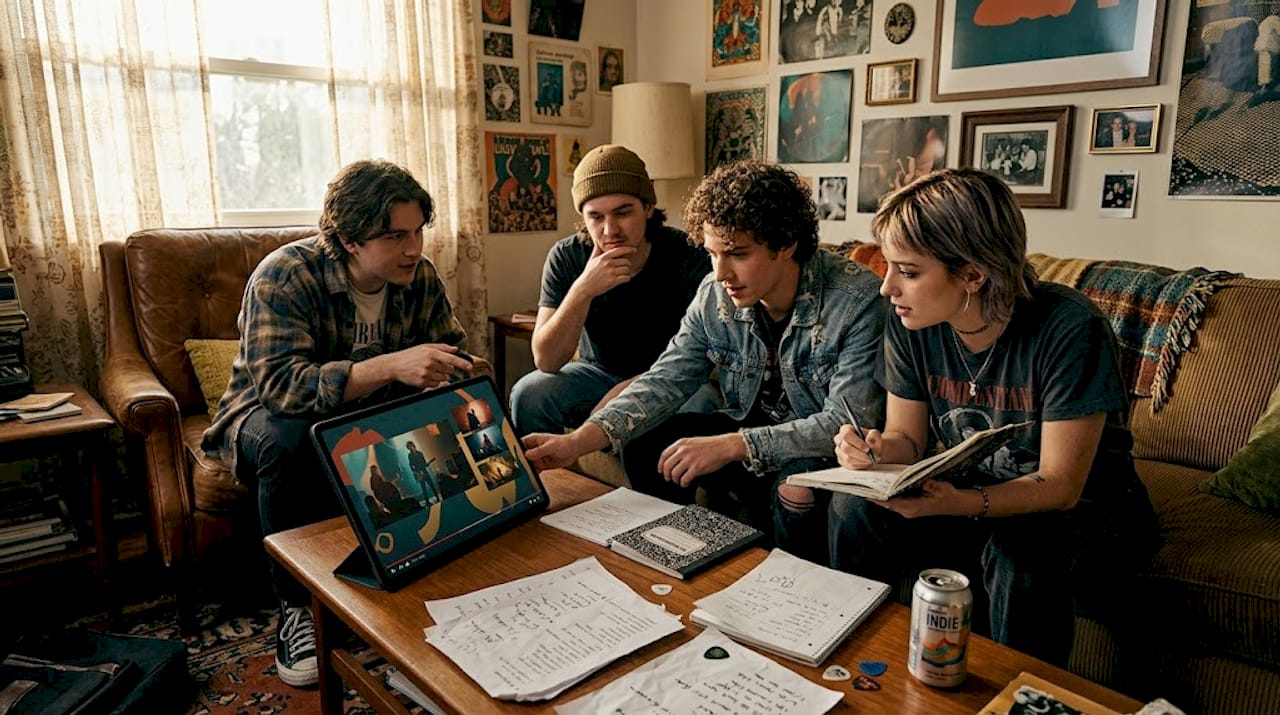
This is a real shift in how releases are structured. The visual isn’t marketing for the song anymore. It’s part of the song’s identity.
Interactive streaming with AR and VR is also part of the 2026 toolkit. AR means augmented reality, where digital elements are layered over real-world camera views. VR means virtual reality, a fully immersive digital environment. Both are being used to let fans choose camera angles, explore alternate edits, or experience a performance from inside the visual world of the video.
How bands are building interactive visual experiences:
Release a teaser visual tied to a specific lyric or riff before the full video drops
Offer alternate cuts of the video for different platforms and moods
Use AR filters tied to the video’s visual language for fan-created content
Build VR performance environments for live-stream events
Share behind-the-scenes edits that deepen the story of the main video
Format | Fan engagement level | Production complexity |
Standard music video | Moderate | Low to medium |
Short-form clip series | High | Low |
AR filter integration | Very high | Medium |
VR performance experience | Highest | High |
Pro Tip: You don’t need a full VR production to start. An AR filter tied to your album art or video aesthetic costs almost nothing and gives fans something to interact with and share. See how technology drives creativity in hard rock and metal for more on this.
How are these trends measured? The rise of AI evaluation benchmarks
Having covered what’s new and why it matters, it’s worth asking how the industry is actually measuring quality in AI-generated music videos. Not all AI video tools are equal, and the gap between a polished result and a generic one is significant.
Benchmarks like Karma-MV, which includes 37,737 multiple-choice questions, enable detailed evaluation of cross-modal reasoning and video generation quality. Cross-modal reasoning means how well the AI understands and connects what it hears in the music to what it generates visually. Tempo sync, scene causality, and retrieval accuracy are the metrics that separate tools worth using from ones that just look impressive in demos.
What to look for when evaluating AI music video tools:
Tempo sync accuracy: Does the visual edit respond to the actual beat?
Scene causality: Do visual transitions make narrative sense?
Retrieval accuracy: Can the tool find and apply the right visual references?
Resolution and output quality at delivery
Consistency across the full video, not just the first 30 seconds
For rock and metal creators, this matters because the genre demands precision in how visuals hit. A breakdown that doesn’t land visually at the right moment breaks the whole experience. The step-by-step music video guide we put together walks through how to apply these evaluation criteria to your own production process.
Why authentic genre energy and fan insight still win
Here’s the honest take after watching all of this technology arrive: the bands getting the most out of these 2026 music video trends are not the ones chasing every new tool. They’re the ones who know exactly what their music feels like and use technology to communicate that feeling more powerfully.
No AI workflow captures the specific weight of a Kentucky-born breakdown or the particular tension in a vocal that comes from real lived experience. We’ve been in that place ourselves, working through reunion, rebuilding, and figuring out how to bring our sound into a new era without losing what made it real in the first place. Technology helped us move faster. It didn’t tell us what to say.
The pitfall we see constantly is over-automation. Bands hand their visual identity to an AI tool and get something technically impressive but emotionally hollow. The algorithm rewards intensity, but fans remember honesty. The two aren’t the same thing, and the difference shows.
The winning formula in 2026 is straightforward: use the technology to amplify your musical identity, not to define it. Listen to your audience. Build visuals that feel like your music actually sounds. The tools available now make that easier than ever, but they still require you to know what you’re trying to say. That part hasn’t changed. Explore why innovation drives hard rock and metal’s power for more on how the best bands are threading this needle.
Explore more and connect with the future of rock visuals
Ready to go further? Whether you’re a fan wanting to understand what’s driving the next wave of hard rock and metal visuals, or a creator looking to build something real with these tools, there’s more waiting for you.

At Winter Agony, we’re living this shift in real time, using AI-assisted production on our new tracks while staying grounded in the sound and honesty that brought us here from Kentucky in 2005. Our blog covers the creative process, the technology, and the genre thinking behind everything we make. Come see what we’re building, share your thoughts, and be part of the conversation about where rock and metal visuals go next.
Frequently asked questions
What is the biggest technical breakthrough in music video creation for 2026?
Generative AI workflows have made it possible to produce high-resolution music videos much faster than traditional CGI, often in a matter of days rather than months.
How do text-to-video and audio-reactive tools impact heavy metal and hard rock videos?
They allow creators to generate visuals directly from song lyrics or musical cues, with text and music-driven synthesis leading to tighter sync between the music’s energy and the visual impact.
Why are benchmarks like Karma-MV important for music videos?
Karma-MV benchmarks provide objective ways to measure how well AI-generated videos align with the music’s tempo, narrative, and emotional tone, which builds trust in new creative workflows.
What makes short-form video so influential for rock and metal?
Short-form clips with rock elements perform strongly on discovery platforms because the genre’s high-energy moments create immediate reactions that algorithms favor and fans share.
What interactive technologies are emerging in music videos for 2026?
AR and VR experiences now let fans choose camera angles or explore alternate edits, turning passive viewing into something fans can actually move through.
Recommended
Comments