


The role of music production in hard rock and metal
- Travis B
- Apr 18
- 8 min read

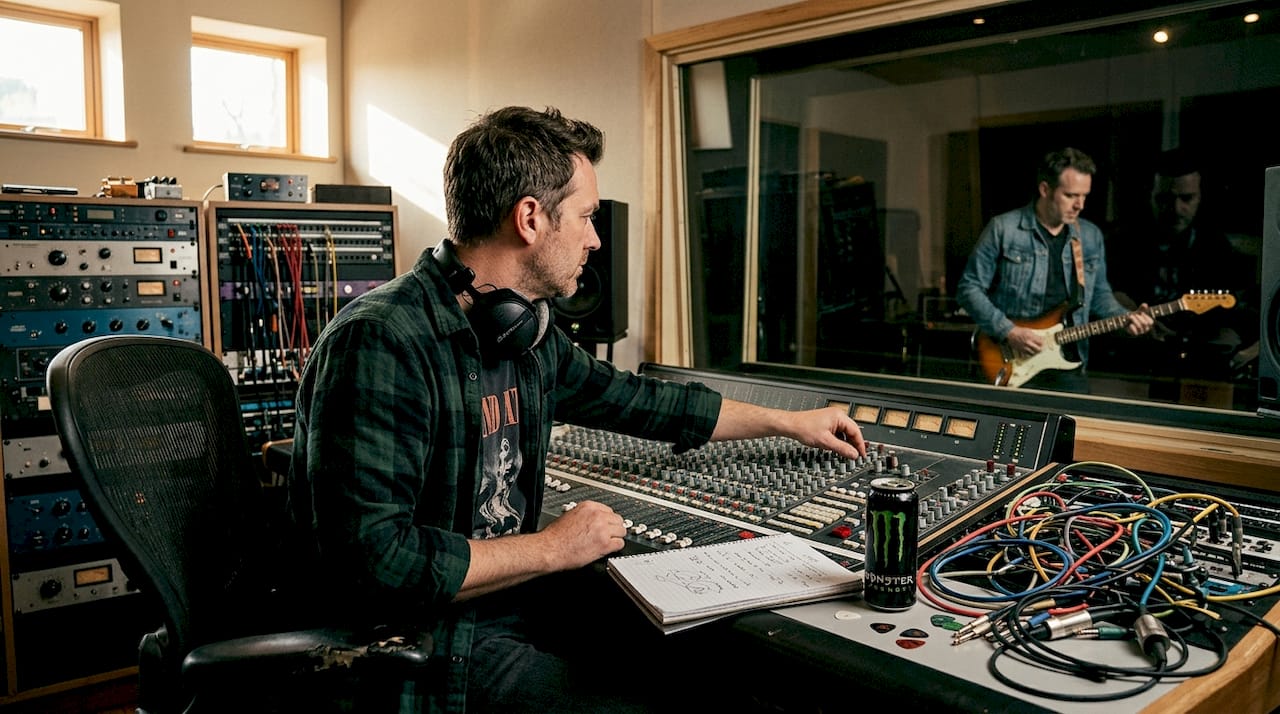
Think the heaviness in your favorite metal record comes purely from the guitarist cranking a Marshall stack? That’s a common assumption, and it’s only part of the story. The core aesthetic of heaviness in hard rock and heavy metal is built through a careful balance of raw performance, smart arrangement, and serious engineering. The producer is the architect behind all of it, and most listeners never even notice. In this guide, we’re breaking down what producers actually do, how heaviness gets engineered from the ground up, and what the best in the business have learned about making records that hit hard and feel real.
Table of Contents
Key Takeaways
Point | Details |
Producer shapes heaviness | A skilled producer is essential to achieving the raw power that defines hard rock and heavy metal. |
Modern sessions are complex | Professional metal songs often use 50 or more tracks, combining meticulous engineering and performance. |
Philosophy affects sound | Naturalistic and hyperreal approaches lead to very different listening experiences. |
Balance beats extremes | Great records blend technology and human energy for lasting heaviness. |
What does a producer really do?
To understand the deep impact of producers, it’s crucial to define exactly what they do. A lot of people picture a producer sitting in a chair, nodding along while the band plays. That picture is way off. In hard rock and heavy metal, a producer is part creative director, part technical architect, and part emotional coach. They carry a vision for the record from the first conversation all the way through to the final master.
Before a single note gets recorded, a good producer is already deep in pre-production. That means working with the band on song structures, tuning arrangements so every riff lands with maximum impact, and identifying any weak spots that could undermine the final product. This phase is where records are really won or lost, and it’s often invisible to the listener.
Once tracking starts, the producer guides every performance decision. Which guitar tone captures the right aggression? Does the drum performance feel locked in or a little loose? Should the vocal take more grit or more control? These calls shape the entire emotional character of the record. Production balances arrangement, performance, and engineering to create the characteristic heaviness the genre demands, and none of those three elements can carry the weight alone.
Here’s a quick look at what a hard rock or metal producer typically handles:
Pre-production: Song structure, arrangement refinement, tempo and tuning decisions
Tracking: Overseeing and directing all instrument and vocal performances
Editing: Tightening performances, aligning timing, replacing or reinforcing sounds
Mixing direction: Shaping the sonic balance, depth, and punch of the final mix
Communication: Translating the band’s artistic vision into technical decisions
Quality control: Listening critically at every stage to protect the record’s integrity
Pro Tip: The bands that come into pre-production with a clear, specific vision of what they want to feel when someone presses play are the ones who end up with records that stand apart. Don’t skip this step.
The science of heaviness: Engineering and arrangement
With the producer’s responsibilities clarified, let’s dig into the technical side, the heaviness you hear and feel. Creating sonic weight is not an accident. It’s a deliberate, step-by-step construction process that happens across dozens of decisions in the studio.
Contemporary metal productions often use 50 to 100 or more tracks per song, involving extensive pre-production, separate tracking, editing, sample reinforcement, and sophisticated processing. That number surprises a lot of people. A live band might have four or five musicians on stage, but in the studio, each instrument gets multiplied, layered, and sculpted until the sum is something far bigger than the parts.
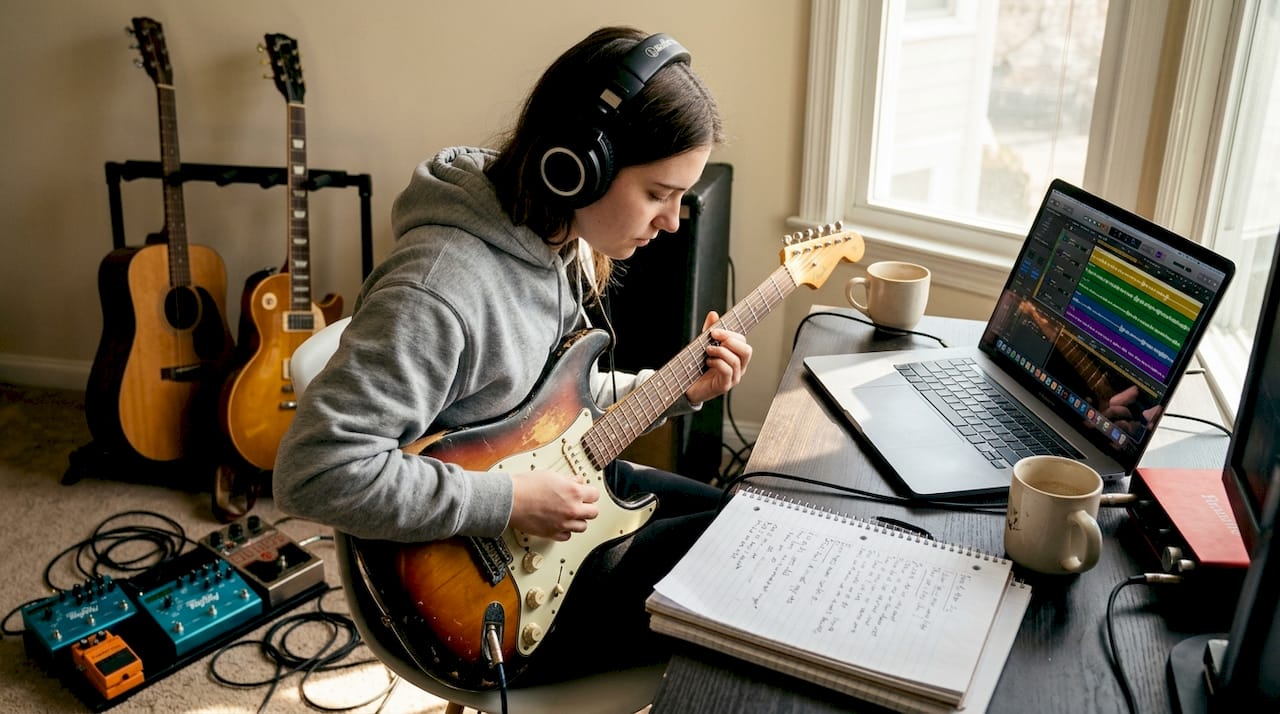
Here’s a typical tracking breakdown for a modern metal song:
Instrument | Typical Track Count | Purpose |
Drums | 10 to 20 | Individual mics per piece, room mics, sample layers |
Guitars | 8 to 16 | Rhythm doubles, lead layers, DI tracks |
Bass | 2 to 4 | Direct, mic’d amp, blended sub layer |
Vocals | 6 to 14 | Lead, doubles, harmonies, ad libs |
Keys/Synths | 2 to 8 | Texture, atmosphere, melodic support |
FX/Samples | 4 to 10 | Transitions, impacts, ambient layers |
The journey from raw performances to finalized heaviness usually follows a recognizable path:
Capture raw performances with as much energy and intention as possible
Edit for tightness by aligning timing and removing inconsistencies without killing feel
Layer and reinforce with doubles, samples, and additional takes
Manage the frequency spectrum so low end hits hard without muddying the mids
Apply saturation and compression to add density and glue to the mix
Finalize with mastering to ensure the record translates across all playback systems
Every one of those steps is a chance to add or subtract weight. A poorly edited drum track loses punch. An over-compressed guitar loses bite. Getting all six right is what separates a record that sounds heavy from one that just sounds loud.
Production philosophies: Naturalistic vs. hyperreal approaches
After unpacking the mechanics, it’s time to explore the artistic philosophies guiding today’s top producers. Not every producer approaches heaviness the same way, and understanding the two dominant schools of thought can completely change how you listen to records, and how you make them.
Two contrasting production philosophies define much of modern rock and metal production. Naturalistic production prioritizes minimal intervention, human feel, and restraint in processing. Hyperreal production goes for precision editing, multiband processing, and sound design that reaches beyond acoustic reality.
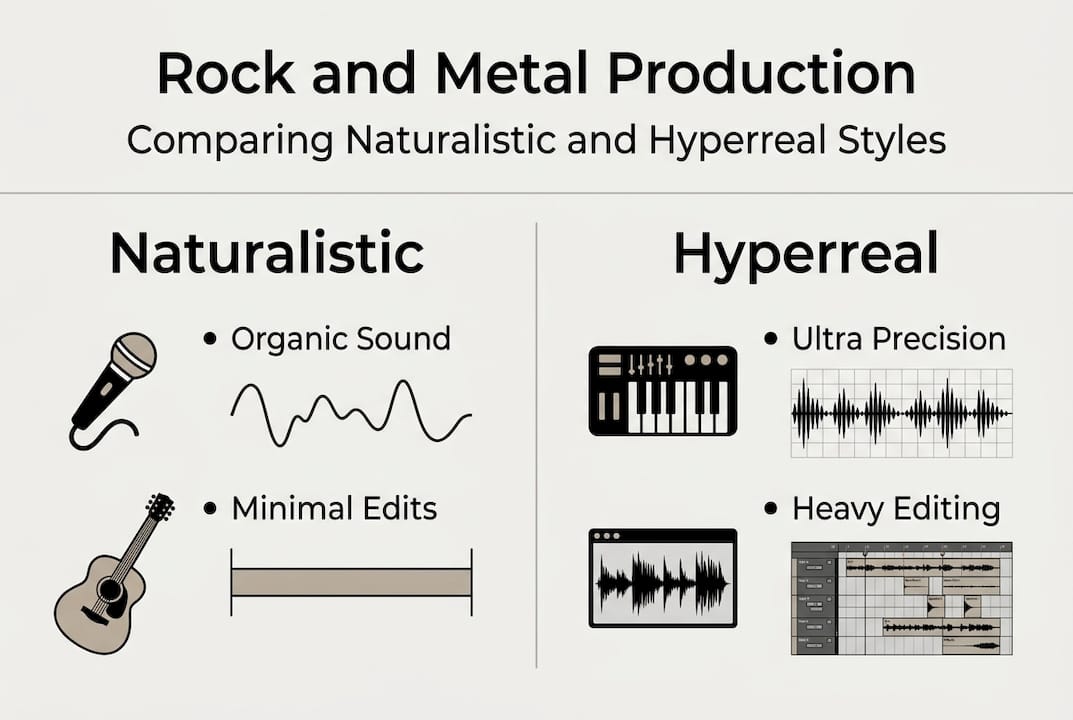
Philosophy | Core Approach | Sonic Character | Risk |
Naturalistic | Minimal editing, live energy preserved | Warm, organic, dynamic | Can sound rough or unpolished |
Hyperreal | Heavy editing, layered processing | Massive, precise, controlled | Can lose organic energy |
Producer Jens Bogren, known for his work with bands like Opeth and Arch Enemy, has spoken about prioritizing composition and arrangement above all else, letting the music breathe rather than forcing it into a sonic mold. On the other end, producers like Odeholm lean into the hyperreal aesthetic, reshaping sounds until they exist in a space no acoustic instrument could naturally occupy.
“The composition always comes first. If the song isn’t there, no amount of production will save it.” This kind of thinking reflects the naturalistic philosophy at its core.
Neither approach is objectively better. A doom metal record might benefit from the raw, organic weight of naturalistic production. A modern djent or metalcore record might demand the surgical precision of the hyperreal workflow. The key is matching the philosophy to the musical goal, not defaulting to one because it’s trendy or because the tools make it easy.
The real danger in the hyperreal camp is overproduction. When every imperfection gets removed, every transient gets quantized, and every frequency gets sculpted to within an inch of its life, the record can start to feel sterile. Heavy, yes. But not alive.
Learning from the masters: Insights from benchmark producers
To ground these ideas, let’s see how elite producers actually interpret and execute the role of music production. One of the most useful resources available to anyone studying this craft is the HiMMP benchmark study.
The HiMMP benchmark study brought together 8 world-class producers, including Jens Bogren and Andrew Scheps, and had each of them mix the same song, “In Solitude,” using identical multitracks. Researchers then analyzed the results for dynamics, spectrum, imaging, and saturation. The findings were revealing.
Here’s what stood out across the benchmark mixes:
Dynamic range varied significantly between producers, even starting from the same source material
Low-end treatment was the biggest point of divergence, with some producers favoring a tight, punchy sub and others letting it breathe wider
Vocal placement ranged from upfront and aggressive to blended into the texture of the mix
Saturation choices shaped perceived heaviness more than raw volume in most cases
Stereo imaging differed widely, affecting how wide and physical the record felt
What this study makes clear is that there is no single formula for heaviness. Two world-class producers can start from the same raw tracks and arrive at completely different results, both of which can be valid and powerful in their own right.
Pro Tip: Pull up two or three different mixes of the same song if you can find them, live versions, demos, alternate mixes, and do an A/B comparison. You’ll start hearing the specific decisions that create or kill heaviness in ways that no amount of reading can teach.
For aspiring musicians and producers, the lesson here is practical. Study the choices, not just the outcomes. Ask why a mix feels the way it does, not just what it sounds like.
Why balancing tech and feel is the real secret
Having explored philosophies and pro practice, here’s the big-picture perspective we’ve earned. The music industry is increasingly concerned about one specific trend: the over-reliance on technology stripping the life out of heavy music. We’ve seen it happen. Records that are technically flawless but emotionally hollow. Mixes that are loud and precise but somehow don’t make you want to move.
The risk of overproduction losing organic energy is real, and the answer isn’t to abandon technology. It’s to use it with intention. The most compelling heavy records we’ve heard, and made, are the ones where raw human energy and smart technical choices exist together. Neither one carrying the whole load.
Hybrid workflows are where the magic tends to happen. Track with real energy, edit with precision, mix with ears that prioritize feel over perfection. That’s not a formula. It’s a mindset. And developing your own version of that balance, one that fits your sound and your goals, is honestly the most important thing any producer or musician can do.
Explore more modern heaviness with Winter Agony
Ready to experience the sound born of these production philosophies? We’ve lived this journey firsthand, from DIY sessions in Kentucky to working with modern tools that push what heavy music can be. Every track in the Winter Agony discography reflects these exact tensions: raw performance energy meeting deliberate production choices, naturalistic grit sitting alongside modern sonic weight.

If you want to hear how these principles play out in real records, from arrangement decisions to final mix character, our music is a direct window into that process. Head over to Winter Agony to explore the full catalog, read our story, and connect with the US emotional rock and metal scene we’ve been part of since 2005. The production conversation doesn’t end here.
Frequently asked questions
What is the main role of a music producer in metal and hard rock?
A producer shapes a band’s sound and guides the process of achieving genre-specific heaviness by balancing performance, arrangement, and advanced engineering. As the core aesthetic of the genre demands, no single element carries the weight alone.
Why do metal songs use so many tracks during production?
Modern metal uses 50 to 100 or more tracks per song to achieve complex arrangements, precise editing, and sonic weight far beyond a simple live performance.
What is the difference between naturalistic and hyperreal production approaches?
Naturalistic production aims for a human, live feel with minimal intervention, while hyperreal goes for ultra precision and sound design beyond acoustic reality.
Can overproduction make metal and hard rock sound less heavy?
Yes. Excessive processing can sap organic energy, so effective producers balance tech with human feel through hybrid workflows for maximum impact.
Recommended
Comments